About Michael
A career spent listening to the audience
Language strategist. Researcher. Author. And, above all, a translator between what organizations mean and what audiences hear.
The short version
Michael Maslansky is a corporate language strategist and one of the leading practitioners of research-based communication. For more than twenty years he has studied a single, stubborn problem: why accurate, well-intentioned messages fail with the audiences that matter most — and what language succeeds in their place.
His book, The Language of Trust: Selling Ideas in a World of Skeptics, distilled thousands of hours of audience research into four principles of credible communication that are now used by communicators across financial services, healthcare, energy, technology, and the public sector.
The longer version
Michael's method was forged behind the one-way glass of focus group facilities, watching dial lines rise and fall as ordinary people reacted to extraordinary claims. What he saw, over and over, was a collapse in the benefit of the doubt. Audiences had stopped asking "is this true?" and started asking "what are they hiding?" — and most corporate language was written for a world that no longer existed.
That insight became a practice. As a researcher and strategist, Michael has guided Fortune 500 companies, industry associations, and leadership teams through the moments when words carry the most weight: crises, launches, transformations, and rebuilding campaigns after trust has been broken. His firm's instant-response research has tested messaging on some of the most contested topics in American public life — from financial reform to healthcare to energy — always with the same discipline: the audience decides.
As a keynote speaker, he has brought that research to hundreds of stages, showing leaders their own language through their audience's ears. The talks are known for a particular moment: the slide where the room realizes the "before" example is theirs.
The principles behind the work
- Evidence over instinct. Conference rooms are echo chambers. Every important message deserves contact with a real audience before it ships.
- Plausible beats impressive. The strongest claim you can make is the strongest claim your audience will believe — not one word more.
- Clarity is respect. Jargon and hedging tell audiences you're protecting yourself. Plain language tells them you're talking to them.
- Trust is built in sentences. Reputations aren't won in campaigns; they're won and lost one answer, one paragraph, one apology at a time.
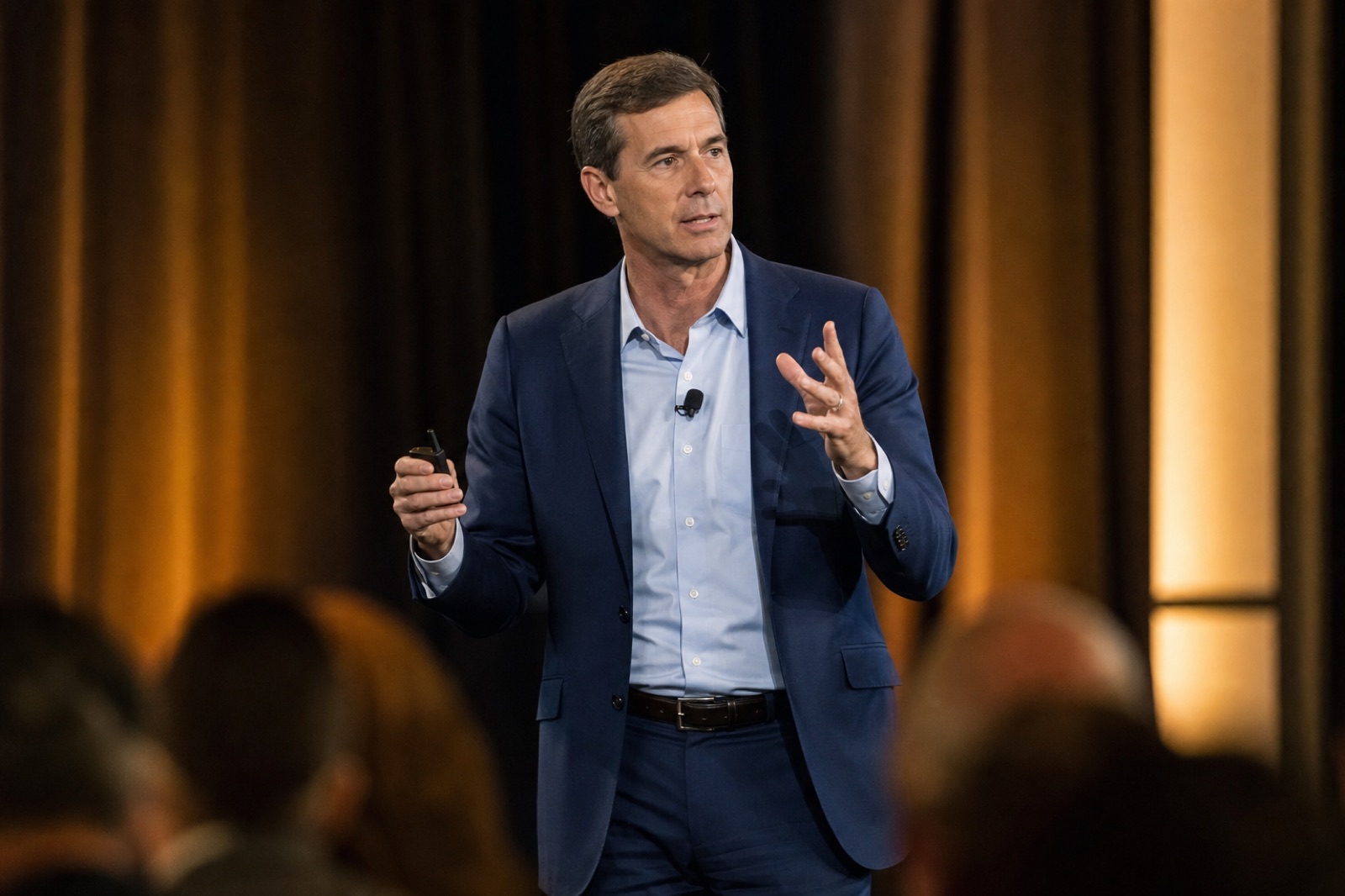
"I've spent my career on the other side of the glass. The audience is always more skeptical than the conference room believes — and always more persuadable than it fears." Michael Maslansky
Put two decades of audience research to work
Keynotes, consulting, research, and workshops — every engagement starts with a conversation.
Get in Touch