The Book
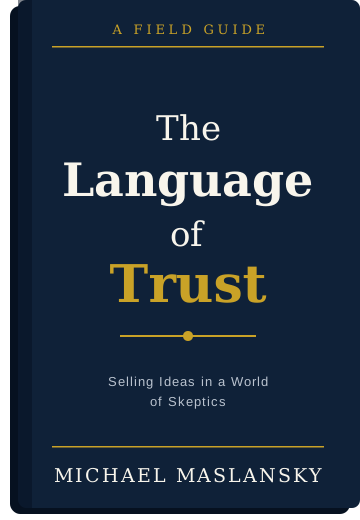
The Language of Trust
Selling ideas in a world of skeptics — a field guide to being believed when the benefit of the doubt is gone.
Synopsis
Somewhere along the way, audiences stopped believing us. Customers assume the fine print hides a trap. Employees translate every leadership memo into "what are they really saying?" Investors discount the earnings call before it starts. The Language of Trust is about communicating in that world — not by finding cleverer spin, but by abandoning spin altogether.
Built on years of instant-response research with real audiences, the book shows exactly where trusted language and distrusted language diverge. It documents the phrases that trigger skepticism regardless of intent, explains why facts alone rarely rescue a doubted message, and lays out four working principles of credible communication: be personal, be plainspoken, be positive, and be plausible. Each principle comes with tested examples — the before, the after, and the audience data that separates them.
"In a world of skeptics, the most persuasive thing you can be is believable." From The Language of Trust
Who it's for
The book was written for anyone whose success depends on being believed by people inclined to doubt them:
- Executives and founders who have to sell change — to markets, boards, and their own people
- Communications, PR, and brand professionals writing under scrutiny
- Salespeople and advisors in industries where trust is the product: finance, insurance, healthcare
- Leaders in regulated or embattled sectors who inherit their industry's credibility problem
- Anyone who has watched an accurate, well-crafted message fail and wondered why
What you'll learn
- Why the era of "trust me" communication ended, and what replaced it
- The vocabulary of skepticism: words that sound fine in the boardroom and fail in the living room
- How to talk about price, fees, risk, and bad news without triggering the spin detector
- Why plausible beats impressive — and how overclaiming quietly taxes everything else you say
- How to structure answers to hostile questions so credibility survives the exchange
- A practical editing discipline you can apply to any message before it ships
Praise
What readers say
"The rare communication book grounded in data instead of anecdotes. I rewrote our entire client onboarding letter before I finished chapter four."
"Required reading for our comms team. The 'plausible beats impressive' chapter alone has saved us from ourselves a dozen times."
"I've handed this book to every founder I advise. It changes how you write everything — decks, emails, apologies."
Bring the ideas to your organization
The book is the starting point. Keynotes, workshops, and consulting turn its principles into your team's daily practice.
Work With Michael